
March 25, 2026
How Much Room Does a 4-Stool Island Really Need?
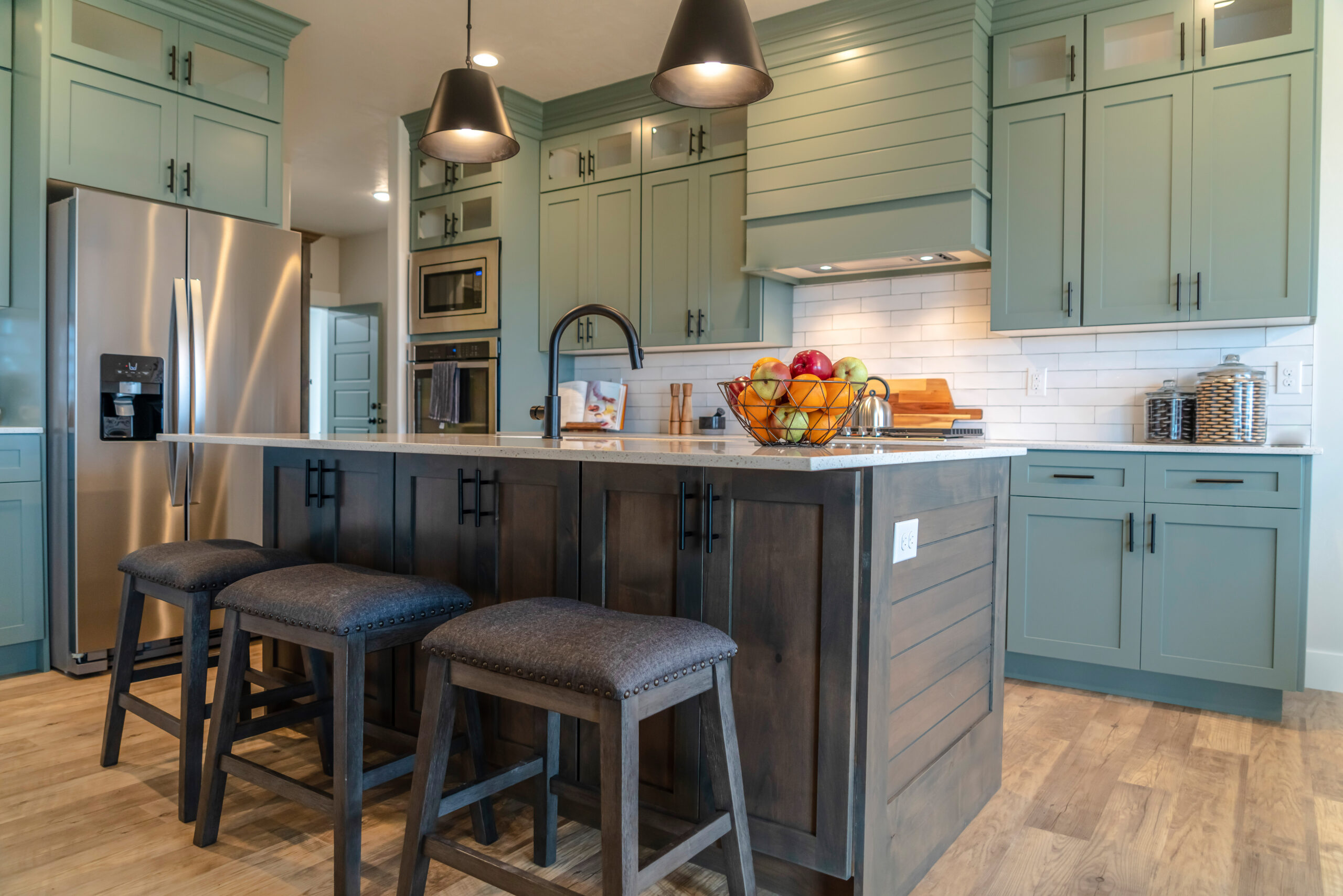
Quick Answer: The Space a 4-Stool Island Needs
Standard kitchen island size information can feel confusing, so here is the short version to get you started. For four stools, plan an island length of 7.5 to 9 feet when all seats are in a row. If you can wrap seating onto a second side, you can shorten the long side to about 6 to 7 feet. Target a counter depth of 42 to 48 inches for comfortable knees and storage. Keep 42 to 48 inches of clearance on all working sides. Use a 12 inch overhang for counter height seating and 15 inches for bar height stools. Standard kitchen island size: learn the real space needed for a 4-stool island, layout tips, and clearance rules to avoid mistakes. Plan smarter. See our guide now.
Understanding the Standard Kitchen Island Size
When homeowners search for the right island, the term standard kitchen island size often comes up. While there is no single size that fits every kitchen, there are common benchmarks that guide a safe, ergonomic design for food prep and seating. Elite Improvements uses these benchmarks as a starting point and then customizes dimensions to fit your kitchen and your family’s routine.
- Typical island height: 36 inches for counter height seating and work surface, 42 inches for bar height seating.
- Common island depth: 24 to 27 inches without seating, 36 to 48 inches with seating and storage on both sides.
- Common island length: 60 to 72 inches for a compact island, 84 to 108 inches for larger kitchens or seating for four.
- Clearances around the island: 42 inches for a one-cook kitchen, 48 inches for a two-cook kitchen. Never go below 36 inches except at a pinch point with no appliances.
These standards are a foundation, not a rulebook. Your final plan should reflect how you cook, how your appliances open, and how many people move through your kitchen daily. The right standard kitchen island size is ultimately the one that maintains safety, comfort, and flow.
Seating Math: Width, Overhang, and Legroom
How much width each seat needs
For most adults, 24 inches of counter width per stool is the minimum for shoulder and elbow comfort. If you want more breathing room, 26 to 30 inches per person feels generous, especially when seats have arms or when kids and adults sit together.
Seat width guide for four stools on one side:
- Minimum comfort: 4 x 24 inches = 96 inches of straight seating length.
- Comfort plus: 4 x 26 inches = 104 inches of straight seating length.
- Spacious: 4 x 30 inches = 120 inches of straight seating length.
If you split the seating onto two sides in an L, you can often seat two on the long run and two on the short run. This keeps each side shorter while still allowing four total seats.
Overhang depth and knee clearance
The overhang is what makes sitting for a meal or homework comfortable. For a 36 inch high island, plan a 12 inch overhang. If your family prefers bar stools at a 42 inch high island, increase the overhang to 15 inches. These depths pair with knee clearances that keep legs from bumping cabinet doors.
- 36 inch high counter: target 9 to 12 inches of knee clearance and a 12 inch overhang.
- 42 inch high counter: target 12 to 15 inches of knee clearance and a 15 inch overhang.
Stone tops with large overhangs may need brackets or corbels. As a rule of thumb, support overhangs greater than 12 inches to avoid deflection and stress on the stone. Elite Improvements confirms structural support during design so the countertop stays safe and solid.
Stool height and spacing
Choose stool height based on counter height. Counter stools pair with 36 inch counters and have seat heights of about 24 to 26 inches. Bar stools pair with 42 inch counters and have seat heights of about 28 to 30 inches. Leave at least 4 inches of space between the top of the seat and the underside of the counter for thigh comfort. Aim for 6 to 8 inches for a more relaxed feel.
Clearance Rules Around the Island
Clearance is where many island projects go wrong. Even the perfect standard kitchen island size will feel tight if aisles are too narrow. Follow these guidelines:
- Work aisle for one cook: 42 inches from counter edge to counter edge.
- Work aisle for two cooks: 48 inches, especially near the sink and cooktop.
- Light traffic or wall side: 36 inches can work if no appliances open into the aisle.
- Refrigerator and oven doors: keep at least 44 inches in front of the appliance to allow the door to open and someone to pass behind.
- Dishwasher to island: leave 42 to 48 inches from the dishwasher door to the island edge so loading is not cramped.
- End of island near a wall: allow 12 to 18 inches beyond the last stool to avoid skinned knees on drywall or trim.
Elite Improvements designs clearances first, then fits the island within that footprint. This avoids the common mistake of forcing a long island into a room that cannot support safe, comfortable aisles.
Layouts That Fit Four Stools
In-line seating along one side
If all four stools sit in a row, you will need a longer run. Plan for 96 to 108 inches of seating length, plus 3 to 6 inches at each end so elbows do not bang into corners or columns. This often leads to an island length around 8 to 9 feet. Depth should be at least 42 inches to allow a 12 inch overhang and a practical cabinet depth.
- Recommended size: 96 x 42 inches for compact comfort.
- Premium size: 108 x 48 inches for more seat width and storage.
- Clearance target: 42 to 48 inches on all working sides.
L-shaped seating on two sides
Splitting the seats can shorten the long edge. Place two stools on the long side and two on the short return. Make sure the inside corner has a generous radius or a clipped corner so knees do not collide. This layout works well when you want to cap the island with a waterfall end or keep the footprint out of a walkway.
- Recommended size: long side seating length 60 to 72 inches. Short side seating length 36 to 48 inches.
- Depth: 42 to 48 inches to support the overhang and storage.
- Corner refinement: angle or radius the inside seating corner to add comfort.
Two-and-two across a wide island
Another option is to seat two on one long side and two directly across. This requires a wider island, typically 48 inches or more, and a comfortable aisle on both sides. It creates a dining table feel and keeps overall island length manageable.
- Recommended size: 72 to 84 inches long by 48 inches deep.
- Seating: two per long side, staggered to prevent knee contact.
- Clearance: do not go below 42 inches on either side.
Minimum Room Size Examples
Use these quick math checks before you fall in love with a particular island size. Assume perimeter counters are 24 inches deep on both sides of the room. Add aisle clearances, then add island width, then add the opposite aisle and counter depth.
- Room with island 42 inches deep and 42 inch aisles on both sides: 24 + 42 + 42 + 42 + 24 = 174 inches. Your room needs to be at least 14.5 feet wide from wall to wall.
- Room with island 48 inches deep and 42 inch aisles on both sides: 24 + 42 + 48 + 42 + 24 = 180 inches. Your room needs to be at least 15 feet wide.
- Island opposite a dining area without cabinets on one side: wall to island needs 42 to 48 inches, then add the island depth only. If the island is 42 inches deep, a clear 7 to 7.5 feet from wall to island face can work.
For length, place the island so oven, dishwasher, and refrigerator doors can open without blocking all circulation. Leave at least 12 inches of counter landing space on each side of a cooktop or sink if they are in the island. This can shift your island a few inches left or right for safety and code compliance.
Appliances, Storage, and Power Considerations
Deciding what lives in the island affects how many stools you can fit. A sink or cooktop takes counter space and reduces the straight run for seating. When an appliance is centered, it is often better to move two stools to a short return so splashes and spills do not reach diners.
- Sinks: leave 18 inches of landing space on at least one side, more if this is the main sink. Plan for trash pull-out nearby.
- Cooktops: leave 12 to 18 inches of landing space on both sides. Include a downdraft or overhead ventilation plan.
- Microwaves: drawer microwaves fit well on the working side of the island and keep counters clear.
- Power: most areas require at least one outlet on an island. Ask your local building official. Elite Improvements coordinates outlet placement with stool seating, panel details, and appliance locations.
- Storage: full-depth drawers on the working side are ideal for pots, pans, and small appliances. Use shallow cabinets or decorative panels on the stool side to protect knees.
Lighting and Support Details That Improve Comfort
Lighting and structure make a big difference in daily use. Pendants should light the seating area without shining in your eyes. Countertop support should be discreet yet strong.
- Pendants: space 24 to 30 inches apart, centered over the seating zone. Aim for 30 to 36 inches from counter to the bottom of the fixture.
- Recessed lights: add task lights over the working side to reduce shadows under your upper body.
- Countertop support: use hidden steel plates or brackets for overhangs beyond 12 inches. This keeps knees from hitting bulky corbels.
- Edge profiles: a slight radius or eased edge is more comfortable on forearms than a sharp square edge.
Common Mistakes to Avoid
- Underestimating aisles. If you squeeze down to 36 inches near the sink, you will feel crowded every day.
- Forgetting door swings. A fridge door that blocks the island when open is a daily frustration.
- Skimping on overhang. Anything less than 12 inches for counter height stools will feel tight.
- No support for deep stone overhangs. Unsupported stone can crack.
- Thick countertop without adjusting overhang. A 2 inch thick top shifts knee space and can cause thigh pinch points.
- Pendants placed over head bumps. Always check clearances for taller family members.
Is a 4-Stool Island Right for Your Kitchen?
If your room can support the clearances and you entertain often, a four-stool island adds dining, homework, and buffet space all in one. If your room is on the smaller side, three stools with a wider seat allocation may be more comfortable. You can also use an L layout to fit four in a shorter footprint while keeping walkways clear.
How Elite Improvements Designs the Right Island
Elite Improvements is a family-owned remodeling company based in Burlington, Wisconsin, serving southeast Wisconsin. Our team blends design and craftsmanship to deliver islands that fit your routine and your room. We start with clearances, then determine the best standard kitchen island size for your space, and adjust cabinet layout, appliance locations, and stool seating for daily comfort.
- Remodeling: full kitchen renovations, custom cabinetry, flooring, fixtures, and layout changes for better flow.
- Additions: kitchen expansions, bump-outs, and sunrooms that create space for an island that truly works.
- Exterior improvements: roofing, siding, and custom decks that enhance your home inside and out.
Accredited by the BBB and Milwaukee NARI, Elite Improvements is committed to ethical practices, clear communication, and excellent service from first sketch to final clean up. Ready to plan your island and avoid costly missteps? Visit eliteimproves.com or call 262-716-6663 to schedule a consultation. We would love to help you design an island that fits your life and looks amazing.
FAQ: Standard Kitchen Island Size and 4-Stool Seating
What is the standard kitchen island size?
There is no single standard kitchen island size, but common starting points are 36 inches tall, 42 to 48 inches deep with seating, and 60 to 72 inches long for smaller kitchens. For four stools, many homes end up with an island around 96 x 42 inches or larger, depending on how the seating is arranged.
Can I fit four stools on a 6 foot island?
It is not recommended. Four stools side by side need about 8 feet for comfort. If you split seating onto a short return, you might fit two on the long side and two on the short side with a 6 to 7 foot island, but you must design the corner and overhang carefully. Elite Improvements can evaluate your floor plan and recommend the best layout for your space.
How deep should a kitchen island be with seating?
Plan 42 to 48 inches deep for comfortable seating and storage. This allows a 12 to 15 inch overhang plus cabinet depth on the working side. If you include storage on the stool side, you may need 48 inches or more.
Is a 36 inch walkway enough?
Use 36 inches only in a low-traffic area with no appliance doors opening into the aisle. The safer target is 42 inches for one cook and 48 inches for two. These distances reduce collisions, spills, and frustration.
How many inches per stool do I need?
Plan 24 inches of counter width per stool as a minimum. If you have larger stools or want extra elbow room, use 26 to 30 inches per seat.
Do I need supports for a 12 inch overhang?
Many materials can manage a 12 inch overhang without visible brackets if the top is properly reinforced. Anything beyond 12 inches typically requires steel supports. Your fabricator and contractor should confirm what your top needs. Elite Improvements coordinates countertop support early in the design to keep your knees clear and your stone safe.
Should I put a sink or cooktop in the island if I want four stools?
You can, but it changes the seating plan. A centered sink or cooktop will often reduce the straight run for four in a row. Consider moving two stools to a short return, or choose a longer island. Also budget landing space on both sides of the appliance or sink for safety and convenience.
What if my kitchen is small?
Consider three larger seats instead of four, or an L-shaped seating plan that fits your footprint. A mobile island or peninsula can also offer seating without cutting off travel paths. Elite Improvements can develop scaled drawings and 3D renderings so you can see how each option fits your room.
Next Steps: Plan With Confidence
Now that you know how the standard kitchen island size relates to a four-stool layout, measure your room and test clearances with painter’s tape on the floor. Check door swings, appliance placement, and the path from fridge to sink to cooktop. If the numbers feel tight, do not force the island. A well-sized three-stool island often delivers more comfort and better traffic flow than a cramped four-stool plan.
When you are ready, the design-build team at Elite Improvements will confirm measurements, recommend cabinet and overhang details, and manage permits, electrical, and finishes. Call 262-716-6663 or visit eliteimproves.com to start your kitchen remodel. We serve Burlington and southeast Wisconsin with craftsmanship you can count on and service you will appreciate every step of the way.
Related Posts
Do Heated Bathroom Floors Actually Warm Up The Whole Room In Winter?
How To Figure Out The Best Placement For Your Kitchen Sink
How To Tell If A Kitchen Island Will Actually Fit In Your Small Kitchen Layout